Segregation Conveyor Manufacturer
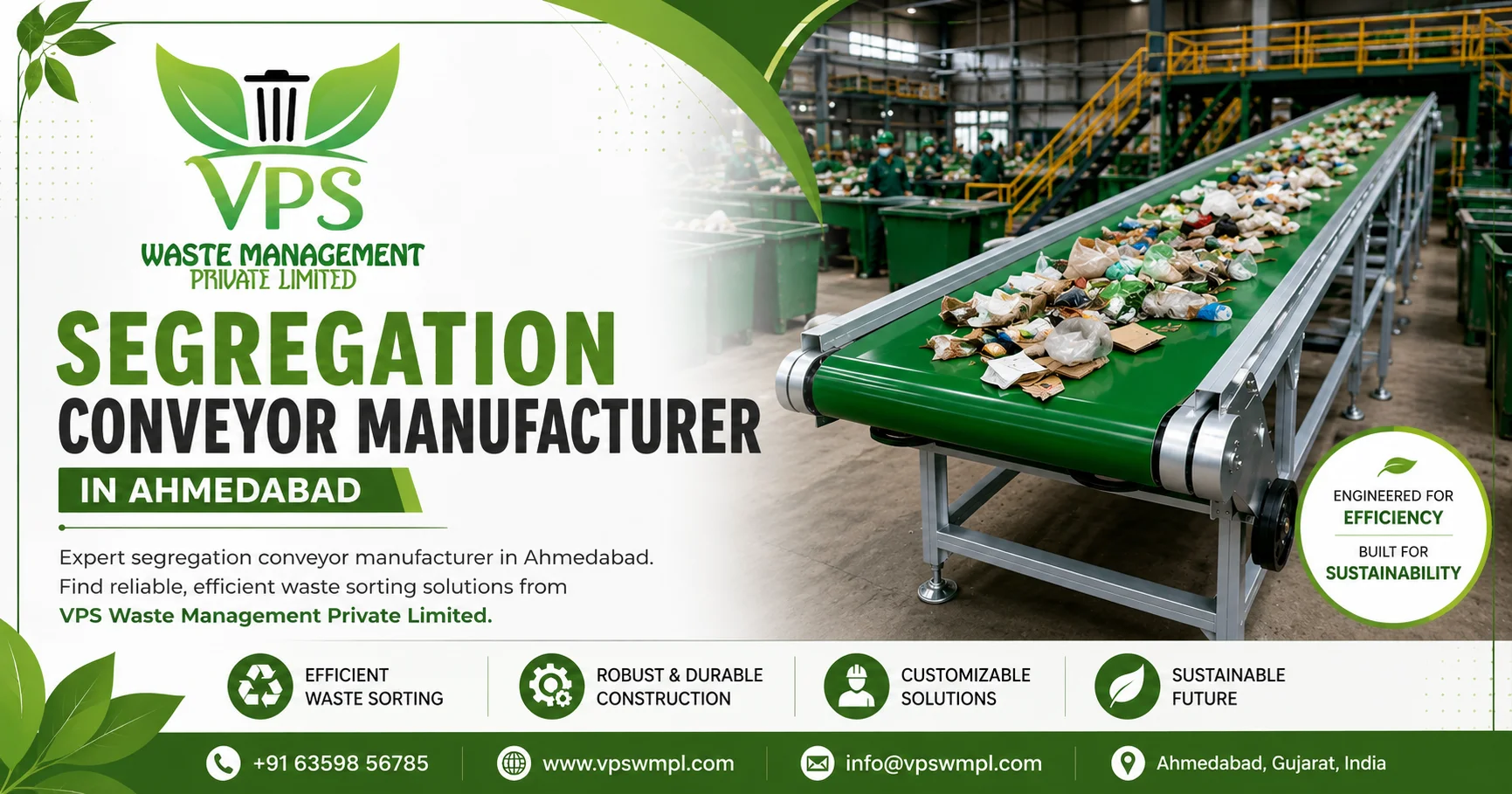
Expert segregation conveyor manufacturer in Ahmedabad. Find reliable, efficient waste sorting solutions from VPS Waste Management Private Limited.
What is a Segregation Conveyor? — Overview
A segregation conveyor is an industrial material handling system specifically engineered to separate different components within a mixed waste stream. Typically, it consists of a continuous belt or chain mechanism that transports materials through a processing area. At various points along the conveyor, workers or automated systems identify and remove specific items based on type, size, or material composition. These systems are vital for recycling facilities, waste processing plants, and manufacturing operations that require the recovery of valuable materials or the removal of contaminants.
Key Features and Technical Specifications
A robust segregation conveyor is characterized by several key features that ensure its efficiency and durability in demanding industrial environments. When evaluating options, consider these specifications:
- Belt Material and Durability: Options include heavy-duty rubber, PVC, or specialized materials resistant to abrasion, chemicals, and extreme temperatures.
- Variable Speed Control: Allows for adjustment of material flow rate to match sorting capacity and operator pace.
- Modular Design: Facilitates customization, expansion, and easier maintenance or replacement of components.
- Integrated Lighting and Access Platforms: Provides optimal visibility for sorters and ergonomic access to the conveyor belt.
- Robust Frame Construction: Typically made from high-grade steel or aluminum for stability and longevity under heavy loads.
- Customizable Sorting Stations: Designed to accommodate the number of sorters and specific sorting requirements.
- Optional Add-ons: Features like magnetic separators, vibratory feeders, or dust suppression systems can enhance functionality.
- Power Efficiency: Designed for optimal energy consumption relative to throughput capacity.
Industrial Applications and Use Cases
Segregation conveyors are versatile tools with applications across numerous industries, playing a critical role in waste management and resource recovery.
- Recycling Facilities: Separating plastics, paper, metals, and glass from mixed recyclables.
- Waste-to-Energy Plants: Sorting non-combustible materials before incineration.
- Composting Operations: Removing contaminants from organic waste streams before processing.
- Manufacturing Plants: Sorting scrap materials, by-products, or defective items for reuse or disposal.
- Mining and Aggregate Industries: Separating different grades of ore or aggregate materials.
- Construction and Demolition Waste Processing: Sorting wood, concrete, metal, and plastics for recycling.
- Electronic Waste (E-waste) Recycling: Separating components like circuit boards, plastics, and metals.
- Textile Recycling: Sorting fabrics by type, color, or material for reprocessing.
How to Choose the Right Segregation Conveyor
Selecting the appropriate segregation conveyor requires careful consideration of your specific operational needs and waste streams. Use this checklist to guide your decision:
- Waste Stream Analysis: Understand the composition, volume, and characteristics of the materials you need to sort.
- Throughput Requirements: Determine the volume of material the conveyor must process per hour or day.
- Sorting Complexity: Assess whether manual sorting, automated sorting, or a combination is needed.
- Space and Layout Constraints: Measure available space and consider how the conveyor will integrate into your existing facility.
- Environmental Conditions: Account for factors like dust, moisture, temperature, and potential exposure to corrosive substances.
- Power and Utility Availability: Ensure your facility can support the conveyor's power requirements.
- Maintenance and Support: Evaluate the availability of spare parts and technical assistance from the manufacturer.
- Budget and Return on Investment (ROI): Balance initial cost with long-term operational savings and efficiency gains.
Quality Standards and Compliance
For any industrial equipment, especially those involved in waste management, adherence to quality standards and regulatory compliance is non-negotiable. Manufacturers like VPS Waste Management Private Limited prioritize building equipment that meets stringent Indian Standards (IS) where applicable, and often align with international benchmarks like ISO certifications for quality management. Buyers should verify that the segregation conveyor is constructed from durable, high-grade materials that can withstand the rigors of continuous operation. Compliance with safety regulations, such as those related to electrical components and moving parts, is also essential to ensure worker safety and operational reliability.
Why VPS Waste Management Private Limited's Experience and Capability Matter
With a commitment to providing robust waste management solutions, VPS Waste Management Private Limited brings valuable experience to the manufacturing of segregation conveyors. Our approach focuses on understanding the unique challenges faced by industries in Ahmedabad and across India. We leverage our technical expertise to design and fabricate conveyors that are not only efficient but also durable and reliable. Our manufacturing process emphasizes quality control at every stage, from material selection to final assembly, ensuring that each unit performs optimally.
We pride ourselves on our ability to offer tailored solutions, working closely with clients to customize conveyor specifications to their exact needs. This includes considerations for belt width, length, speed, sorting station design, and integration with other waste processing equipment. Our team's practical knowledge of waste handling ensures that our equipment is designed for ease of operation and maintenance, minimizing downtime and maximizing productivity for our customers.
Installation, Maintenance, and Care Tips
Proper installation and ongoing maintenance are crucial for the longevity and efficient operation of your segregation conveyor.
- Installation: Ensure the conveyor is installed on a level surface and securely anchored. All electrical connections should be made by a qualified technician according to local codes. Verify that all safety guards are in place before operation.
- Daily Checks: Before each shift, inspect the belt for wear or damage, check that all moving parts are clear of debris, and ensure safety features are functional.
- Regular Cleaning: Keep the conveyor belt, frame, and surrounding areas clean to prevent material buildup, which can cause wear and operational issues. Use appropriate cleaning agents based on the materials being handled.
- Lubrication: Follow the manufacturer's recommended lubrication schedule for bearings and other moving parts to ensure smooth operation and prevent premature wear.
- Belt Tension Adjustment: Periodically check and adjust belt tension as needed to maintain optimal performance and prevent slippage or excessive wear.
- Component Inspection: Regularly inspect critical components such as rollers, pulleys, and the drive system for signs of wear or damage. Address any issues promptly.
- Operator Training: Ensure all personnel operating the conveyor are properly trained on its safe and efficient use, including emergency stop procedures.
Frequently Asked Questions
A segregation conveyor can be designed to handle a wide variety of waste streams, including mixed recyclables like plastics, paper, metal, and glass, as well as organic waste, construction debris, industrial by-products, and electronic waste. The specific design and materials used will depend on the nature of the waste.
By automating the sorting process, these conveyors significantly speed up material separation compared to manual methods. This leads to higher throughput, reduced labor costs, and more consistent sorting accuracy, allowing facilities to process more waste effectively.
The lifespan of a segregation conveyor can vary greatly depending on its construction quality, the intensity of its use, and the maintenance it receives. However, well-built conveyors made from durable materials and properly maintained can last for many years, often exceeding a decade in industrial settings.
Absolutely. Customization is a key advantage. Manufacturers can tailor the conveyor's length, width, belt type, speed, and the number and configuration of sorting stations to precisely match a facility's unique waste stream and sorting requirements.
Safety is paramount. Operators must be trained on proper usage, emergency stop procedures, and lockout/tagout protocols. Key safety features include emergency stop buttons, guarding around pinch points and moving parts, and proper signage. Regular safety inspections are also essential.
By enabling efficient and accurate waste sorting, these conveyors facilitate higher recycling rates and proper diversion of waste streams. This helps businesses meet regulatory requirements for waste reduction, recycling targets, and responsible disposal, contributing to overall environmental sustainability goals.
Conclusion
For industries in Ahmedabad seeking to enhance their waste management capabilities, a high-quality segregation conveyor is an investment in efficiency, sustainability, and regulatory compliance. Understanding the technical specifications, application potential, and the importance of choosing a reliable manufacturer like VPS Waste Management Private Limited is key. By selecting a system that aligns with your specific operational needs and ensuring proper installation and maintenance, you can optimize your waste sorting processes, recover valuable resources, and contribute to a cleaner environment.
Get In Touch
Vps Waste Management Private Limited