Segregation Conveyor
Expert segregation conveyor solutions in Ahmedabad. Enhance waste sorting efficiency with reliable equipment from VPS Waste Management Private Limited.
What is a Segregation Conveyor? — Overview
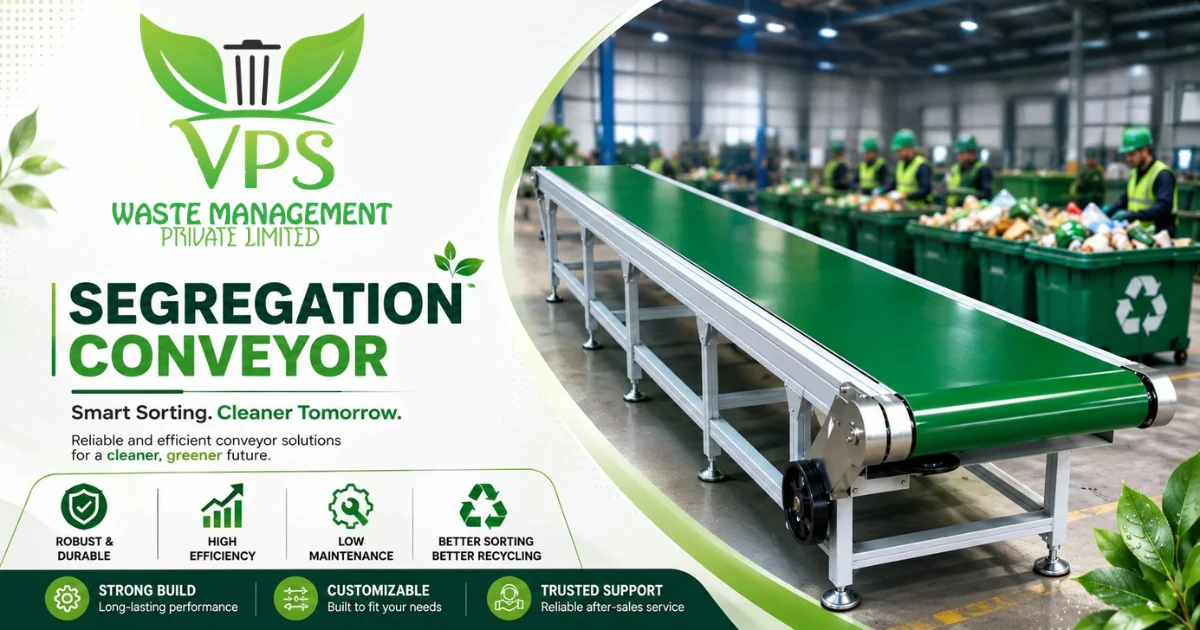
A segregation conveyor is a specialized material handling system designed to facilitate the separation of different waste streams. Typically, it consists of a moving belt that transports mixed waste through a processing area. As the waste moves along the conveyor, trained personnel or automated systems can identify and remove specific materials like plastics, metals, paper, or organic matter. These systems are engineered to handle varying capacities and types of waste, ensuring that valuable components can be recovered for recycling or proper disposal.
Key Features and Technical Specifications
- Variable Speed Control: Allows for adjustment of belt speed to match waste flow and sorting requirements.
- Robust Belt Material: Constructed from durable, wear-resistant materials suitable for abrasive waste streams.
- Modular Design: Enables customization and expansion to fit specific facility layouts and processing needs.
- Integrated Lighting: Provides optimal visibility for manual sorters.
- Adjustable Height and Angle: Facilitates ergonomic working conditions for operators.
- Heavy-Duty Frame Construction: Ensures stability and longevity in demanding industrial environments.
- Optional Sorting Bins/Chutes: Designed for efficient collection of separated materials directly from the conveyor.
- Variable Widths and Lengths: Available in configurations to suit different throughput capacities.
Industrial Applications and Use Cases
- Municipal Solid Waste (MSW) Sorting: Separating recyclables (paper, plastic, metal) from general waste.
- Construction and Demolition (C&D) Waste Segregation: Isolating wood, concrete, metal, and other materials for reuse or recycling.
- Industrial Waste Processing: Sorting manufacturing by-products, scrap materials, and production waste.
- Composting Facilities: Separating non-organic contaminants from organic waste streams before composting.
- Recycling Plants: Streamlining the sorting of specific materials like PET bottles, aluminum cans, or cardboard.
- E-Waste Recycling: Facilitating the separation of components like circuit boards, plastics, and metals.
- Landfill Operations: Pre-sorting waste to reduce the volume sent to landfills and recover valuable resources.
- Material Recovery Facilities (MRFs): Acting as a central component for various sorting operations.
How to Choose the Right Segregation Conveyor
Selecting the appropriate segregation conveyor is crucial for operational efficiency and return on investment. Consider the following factors:
- Waste Stream Analysis: Understand the composition, volume, and density of the waste you need to process.
- Throughput Capacity: Determine the required processing rate (e.g., tons per hour) to match your operational needs.
- Space Availability: Assess your facility's footprint and layout to determine the optimal conveyor size and configuration.
- Sorting Method: Decide between manual sorting, semi-automated, or fully automated sorting mechanisms.
- Material Durability: Choose a conveyor built with materials resistant to the specific types of waste being handled (e.g., abrasive, corrosive).
- Ergonomics and Safety: Ensure the design supports safe and comfortable working conditions for operators.
- Maintenance and Support: Inquire about the ease of maintenance and the availability of after-sales service and spare parts.
- Customization Options: Verify if the manufacturer can tailor the conveyor to specific operational requirements.
Quality Standards and Compliance
When investing in a segregation conveyor, it's essential to ensure it meets relevant quality standards and regulatory requirements. Manufacturers should adhere to industry best practices for fabrication and material selection. While specific certifications for segregation conveyors can vary, look for suppliers who demonstrate a commitment to quality through robust manufacturing processes and adherence to general industrial equipment standards. This includes ensuring the equipment is built for durability, safety, and reliable performance in demanding waste handling environments. Verifying the supplier's quality control procedures and their understanding of local environmental and industrial regulations is paramount.
Why VPS Waste Management Private Limited's Experience and Capability Matter
At VPS Waste Management Private Limited, our extensive experience in manufacturing waste management and hydraulic equipment equips us to design and deliver segregation conveyors that truly perform. We understand the unique challenges faced by industries in Ahmedabad and across India. Our manufacturing process emphasizes robust construction, utilizing high-quality materials that withstand the rigors of waste handling.
Our technical team possesses deep expertise in material flow and sorting dynamics, allowing us to engineer solutions that optimize efficiency. We focus on creating equipment that is not only durable but also user-friendly and safe. From initial consultation to after-sales support, we are committed to providing reliable, customized segregation conveyor systems that meet your specific operational needs and contribute to your waste management goals.
Installation, Maintenance, and Care Tips
Proper installation and regular maintenance are key to maximizing the lifespan and performance of your segregation conveyor.
- Installation: Ensure the conveyor is installed on a level, stable surface. Proper alignment of the belt and rollers is critical. Electrical connections should be made by qualified personnel, adhering to all safety codes.
- Daily Checks: Before operation, inspect the belt for any damage, wear, or debris. Check that all safety guards are in place and secure.
- Cleaning: Regularly clean the conveyor belt, frame, and any chutes or bins to prevent material buildup, which can cause wear and operational issues. Use appropriate cleaning agents that won't damage the belt material.
- Lubrication: Follow the manufacturer's recommendations for lubricating moving parts like bearings and drive mechanisms.
- Belt Tension: Periodically check and adjust belt tension to ensure optimal tracking and prevent slippage or excessive wear.
- Component Inspection: Regularly inspect critical components such as rollers, bearings, drive systems, and electrical controls for signs of wear or damage. Address any issues promptly to prevent larger failures.
- Operator Training: Ensure all operators are properly trained on the safe and efficient use of the segregation conveyor.
Frequently Asked Questions
A segregation conveyor can be designed to handle a wide variety of waste materials, including municipal solid waste, industrial by-products, construction debris, recyclables like plastics and metals, and organic waste. The conveyor's construction and features are often tailored to the specific waste stream's characteristics, such as abrasiveness or moisture content.
It significantly speeds up the sorting process compared to manual methods, allowing for higher throughput. By enabling efficient separation of valuable recyclables and different waste types, it reduces the volume of waste sent to landfills, increases resource recovery rates, and can lower disposal costs.
For recycling, these conveyors are invaluable. They allow for the systematic separation of different recyclable materials (e.g., PET, HDPE, aluminum, paper) on a continuous basis, ensuring higher purity of sorted materials. This leads to better quality recycled feedstock and improved economic viability for recycling operations.
Absolutely. Manufacturers can customize segregation conveyors in terms of length, width, belt material, speed, height, and the inclusion of specific sorting stations or collection bins to precisely match the unique requirements of an industrial application or facility layout.
The lifespan of a segregation conveyor can vary significantly depending on its construction quality, the type of waste it handles, the intensity of its use, and the quality of its maintenance. High-quality, well-maintained conveyors operating in suitable conditions can last for many years, often over a decade.
Routine maintenance includes regular cleaning of the belt and frame, inspection for wear and tear on the belt and rollers, lubrication of moving parts, and checking belt tension. Periodic checks of the drive system and electrical components are also essential for ensuring continued reliable operation.
Conclusion
Implementing an effective segregation conveyor system is a strategic decision for any organization in Ahmedabad looking to enhance its waste management practices. It offers a tangible pathway to increased efficiency, improved resource recovery, and greater environmental responsibility. By carefully considering the specific needs of your waste stream and partnering with an experienced manufacturer like VPS Waste Management Private Limited, you can acquire a robust, reliable, and customized solution that supports your operational goals and contributes to a cleaner future.
Get In Touch
Vps Waste Management Private Limited